

According to Paul Harmon a process-strategy matrix is a matrix formed by an estimate of:
- the strategic importance of a process on the horizontal axis
- the process complexity and dynamics on the vertical axis.
This matrix can be used to determine how to manage individual processes.
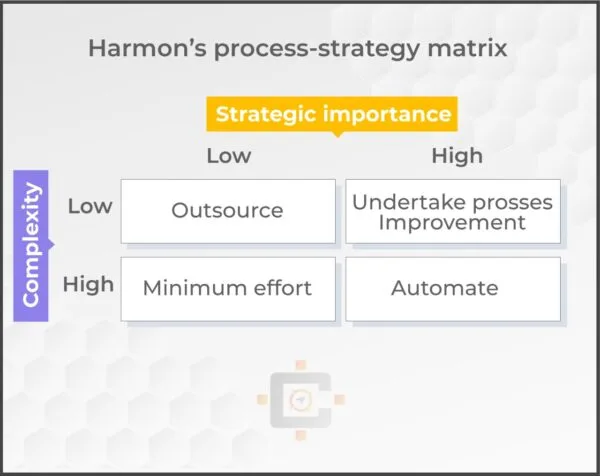
According to Paul Harmon a process-strategy matrix is a matrix formed by an estimate of:
– The strategic importance of a process on the horizontal axis
– The process complexity and dynamics on the vertical axis.
This matrix can be used to determine how to manage individual processes.
1) Undertake process improvement:
These are usually the processes that provide the organisation with its competitive advantage and should be nurtured accordingly. These processes should get constant attention and are the ones that should be considered for redesign. Any improvements are likely to bring large benefits to the organisation.
2) Outsource :
Spending time and effort on these processes will distract from core processes and bring very little benefit. These are the processes which should be outsourced.
3) Minimum efforts:
They should be given the minimum resources necessary for efficient functioning.
4) Automate :
These are valued by customers but they are likely to be stable and easily copied by rivals due to a lack of complexity. These processes should be automated in order to either improve efficiency and/or reduce costs.
This lesson is waiting for its secure Vimeo video.


