

Entrepreneurial Structure = It is appropriate for small owner-managed organisations.
Functional Structure = The simple structure develops into a functional structure were people are organised according to the type of work they do.
Divisional Structure = The divisional structure sees the organisation divided into semi-autonomous units, based on geography, product or market.
Matrix Structure = Matrix structures are often appropriate for organisations which pursue strategies involving lots of project work. Matrix type structures maintain co-ordination by co-working across functions. This usually means some form of dual authority that can be complex and confusing and may make control more difficult.
1. Simple / Entrepreneurial:
The simple/entrepreneurial structure is the approach that most organisations adopt when they are first formed. It is appropriate for small owner-managed organisations, which tend to pursue a strategy of selling a limited range of products or service. Commonly found in sole trader organisations where all organisational decisions are taken centrally by a single individual.
Advantages:
– Decision making is quick and flexible
– Strong control and goal congruence
Disadvantages:
– Not possible or effective once the organisation grows beyond a certain size.
– Reliance on leader
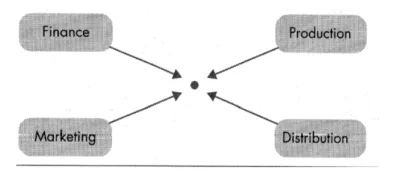
2. Functional:
As organisations start to grow and their strategies become more complex the ability of the owner to make all managerial decisions becomes impossible as the need for specialist skills in a number of areas increases. The simple structure develops into a functional structure were people are organised according to the type of work they do.
Advantages:
– Work is based on specialism.
– Gives economies of scale in operations.
– Offers clear career progression
Disadvantages:
– Can lead to co-ordination and communication problems.
– Leads to ‘silos’ where people do not understand how the whole business works.
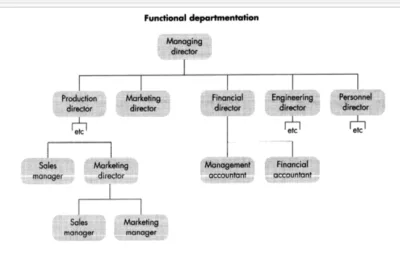
3. Divisional:
The divisional structure, and holding company structure mentioned below, are commonly found in larger organisations which pursue a diverse range of strategies. The divisional structure sees the organisation divided into semi-autonomous units, based on geography, product or market.
Advantages:
– Specialism on basis of divisionalisation.
– Provides clear performance measurement and accountability for divisional managers.
– Gives authority to divisional managers and prepares them for senior management
Disadvantages:
– Divisions may duplicate each other’s functions, leading to waste.
– Divisions become more bureaucratic than they would be as independent organisations, owing to the performance measures imposed by the strategic apex.
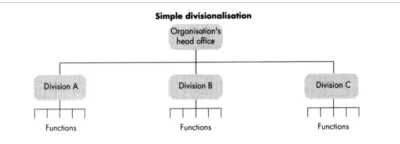
4. Matrix:
The matrix structure (matrix management) can operate as a structure in its own right or can be set up as a sub structure within most of the organisational structures already discussed (with the expectation of the simple/entrepreneurial structure).
Matrix structures are often appropriate for organisations which pursue strategies involving lots of project work. Matrix type structures maintain co-ordination by co-working across functions, addressing some of the disadvantages of functional structures. This usually means some form of dual authority that can be complex and confusing and may make control more difficult.
Advantages:
– Allows for flexible deployment of staff as requirements change.
– Improved communication and co-operation.
Disadvantages:
– Increased potential conflict between managers.
– Complex to run and can lead to slow decision making.
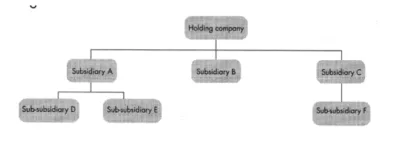
When balaji wafer have started their business, they started making wafers from their home and at the initial level, we can say that they were following an entrepreneurial structure. Owner and the other people working at the same room.
Then after when they started their own Plant, they have to change their structure to Functional structure where they created different functional departments and have appointed a dedicated manager to manage that functions. Like Production, marketing, finance, purchase, etc.
Till date they are producing the namkeens only but now because of their distribution channel and brand name, they are planning to launch the cold drinks also so for that the existing functional structure cannot work, they have to switch to divisional structure.
They have to keep separate divisions for Namkeens and cold drinks. The production, marketing and purchase all these departments will be separate for both divisions.
They can adopt different structure according to their future plans and growth.
This lesson is waiting for its secure Vimeo video.


