

Kotter and Schlesinger believe that successful change is achieved through strong leadership. They set out the following change approaches to deal with resistance:
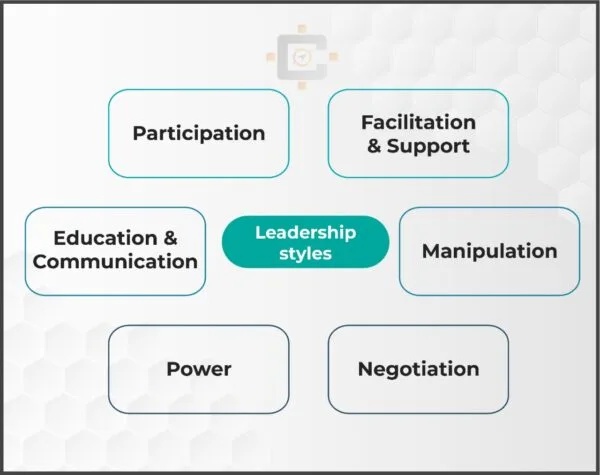
Kotter and Schlesinger believe that successful change is achieved through strong leadership. They set out the following change approaches to deal with resistance:
Participation and involvement:
– This approach aims to involve employees, usually by allowing some input into decision making.
– Employees are more likely to support changes made and give positive commitment as they ‘own’ the change.
Education and communication:
– This approach aims to keep employees informed, usually through presentations about the reasons for the required change.
– This approach relies on the hopeful belief that communication about the benefits of change to employees will result in their acceptance of the need to exercise the changes necessary.
Facilitation and support:
– For example, training or counselling.
– Employees may need help to overcome their fears and anxieties about change.
Manipulation and co-optation:
– The information that is disseminated is selective and distorted to only emphasise the benefits of the change.
– Involves covert attempts to sidestep potential resistance.
Negotiation and agreement:
– This approach enables several parties with opposing interests to bargain.
– This bargaining leads to a situation of compromise and agreement.
This lesson is waiting for its secure Vimeo video.


