

Resistance to change is the action taken by individuals and groups when they perceive that a change that is occurring is a threat to them.
Resistance is ‘any attitude or behaviour that reflects a person’s unwillingness to make or support a desired change’.
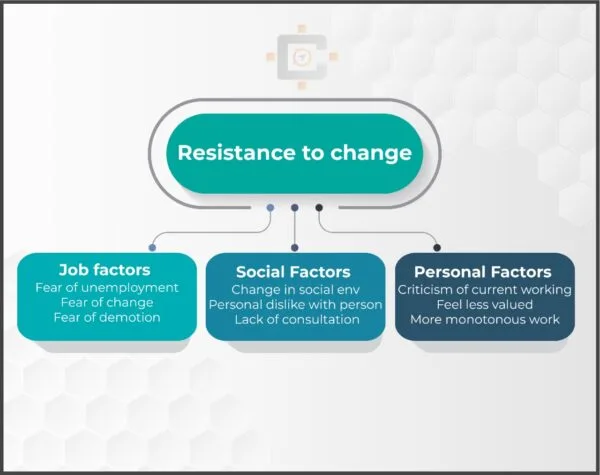
Resistance to change is the action taken by individuals and groups when they perceive that a change that is occurring is a threat to them.
Resistance is ‘any attitude or behaviour that reflects a person’s unwillingness to make or support a desired change’.
Resistance may take many forms, including active or passive, overt or covert, individual or organised, aggressive or timid. For each source of resistance, management need to provide an appropriate response.
Overcoming resistance:
Kurt Lewin developed a simple model for achieving successful change and overcoming resistance in three steps:
- Unfreezing– create the initial motivation to change by convincing staff of the undesirability of the present situation.
- The change process itself– mainly concerned with identifying what the new behaviour or norm should be. This stage will often involve new information being communicated and new attitudes, culture and concepts being adopted.
- Refreezing or stabilising the change– ensuring that the new process and systems becomes a natural part of the organisation’s culture (implying reinforcement of the new pattern of work or behaviour through changed rewards systems etc).
This lesson is waiting for its secure Vimeo video.


